
Hello, and welcome to The Crush Bar, a newsletter about theatre by Fergus Morgan.
This is the free Friday issue, which usually contains an interview with a theatremaker or an essay on a theatre-related topic. This week, it is a chat with musical theatre duo Scott Gilmour and Claire McKenzie, AKA Noisemaker, whose new show Ceilidh opens in Pitlochry next week, then tours. After that, there are three show recommendations.
In case you missed it, here is this week’s issue of Shouts and Murmurs, which is a weekly round-up of the most interesting writing about theatre elsewhere…

You can get Shouts and Murmurs straight in your inbox every Tuesday - and help keep this newsletter going! - by signing up as a paid supporter of The Crush Bar.
Theatres, companies, agencies and other organisations can also sign-up as champion supporters of The Crush Bar, which gets their name in this dedicated tab on The Crush Bar’s Substack homepage and in the footer of every Friday issue, plus full access to The Crush Bar and Shouts and Murmurs for ten different emails.
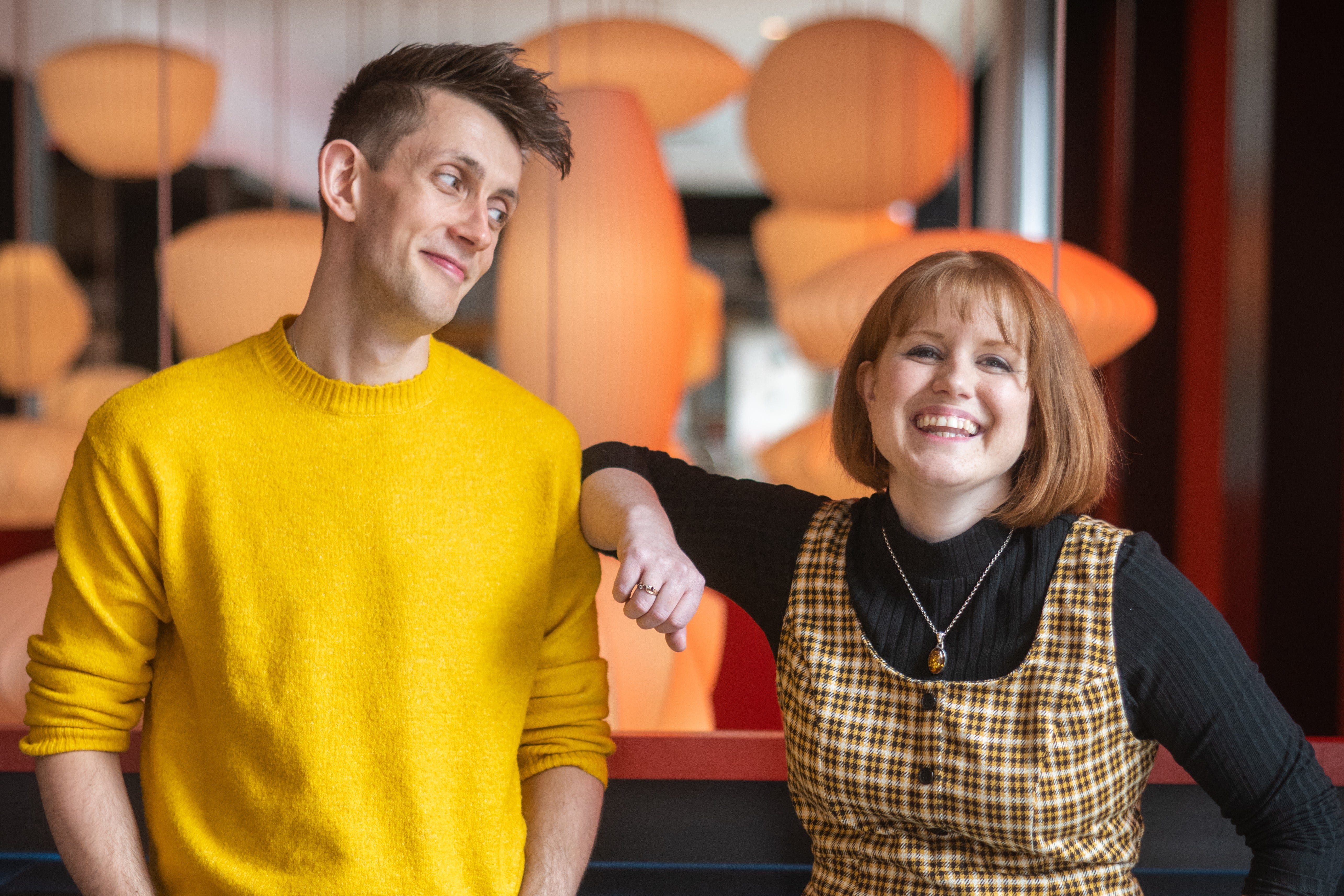
There is a romantic, exhilarating, infectious energy to a good ceilidh.
Whether at a birthday, a wedding, or a regular Saturday night, in a marquee, a ballroom or a field, the traditional Scottish fusion of folk music and group dancing, when done well, engenders a joyous, ardent atmosphere. And it is that effervescent vibe that musical theatre duo Scott Gilmour and Claire McKenzie - AKA Noisemaker - are trying to capture with their new show Ceilidh, which opens at Pitlochry Town Hall next week ahead of a stint at Shoreditch Town Hall and a UK tour. Co-produced by Alan Cumming and Pitlochry Festival Theatre, Grove Entertainment, Barbara Whitman and Trafalgar Theatre Productions, and directed by Tony Award-winner Sam Pinkleton, it uses the structure of a ceilidh for a night of theatrical storytelling.
Gilmour, from East Kilbride, and McKenzie, from Newcastle, first met as students in Glasgow, and have since spent over a decade making musicals, collaborating with both theatres in Scotland and producers in America. Their show Forest Boy, about the curious case of Robin van Helsum, premiered at the Edinburgh Fringe in 2013, then ran in London and New York. Their show Hi, My Name Is Ben premiered at Goodspeed Musicals in Connecticut. Their musical adaptation of classic Scottish comic Oor Wullie for Dundee Rep toured in 2019 and 2020, then returned in 2024. Perhaps their most famous work to date, though, is Scots, a comedy romp through the history of Scotland, which first ran at A Play, A Pie and A Pint in 2022, then returned in various iterations, culminating in a Scottish tour produced by Raw Material earlier this year.
When did you first come up with the idea of building a show around a ceilidh?
SG: We had the notion of using the structure and form of a ceilidh as the vehicle for a theatrical story a few years ago, when Glasgow was hosting the European Championships in 2018. There was loads of little artworks and stuff around the city. We were commissioned alongside NOISE Opera to do a tiny, ten-minute piece in The Grand Ballroom at Sloans. They had just started doing weekly ceilidhs there, so we decided to tell a little story, get the audience to do a strip-the-willow, and that was it. It was an experiment that we then kept on the shelf for ages.
How did the show develop from there?
SG: A couple of years later, we were brought onto a commissioning program run by Beth Williams and Barbara Whitman, who have become the lead producers on the show. We went back to the idea then. That’s where the show has come from.
CM: Well, that and a lifetime of going to ceilidhs. I went to my first at eighteen in Glasgow, so I came to it a bit later than Scott, but they are such an important thing in my life. Every milestone – my thirtieth, my wedding – has had a ceilidh. We wanted to try and capture that energy and turn it into a theatrical night out.
How does the show work? Is it a musical? Is it a ceilidh? What is it exactly?
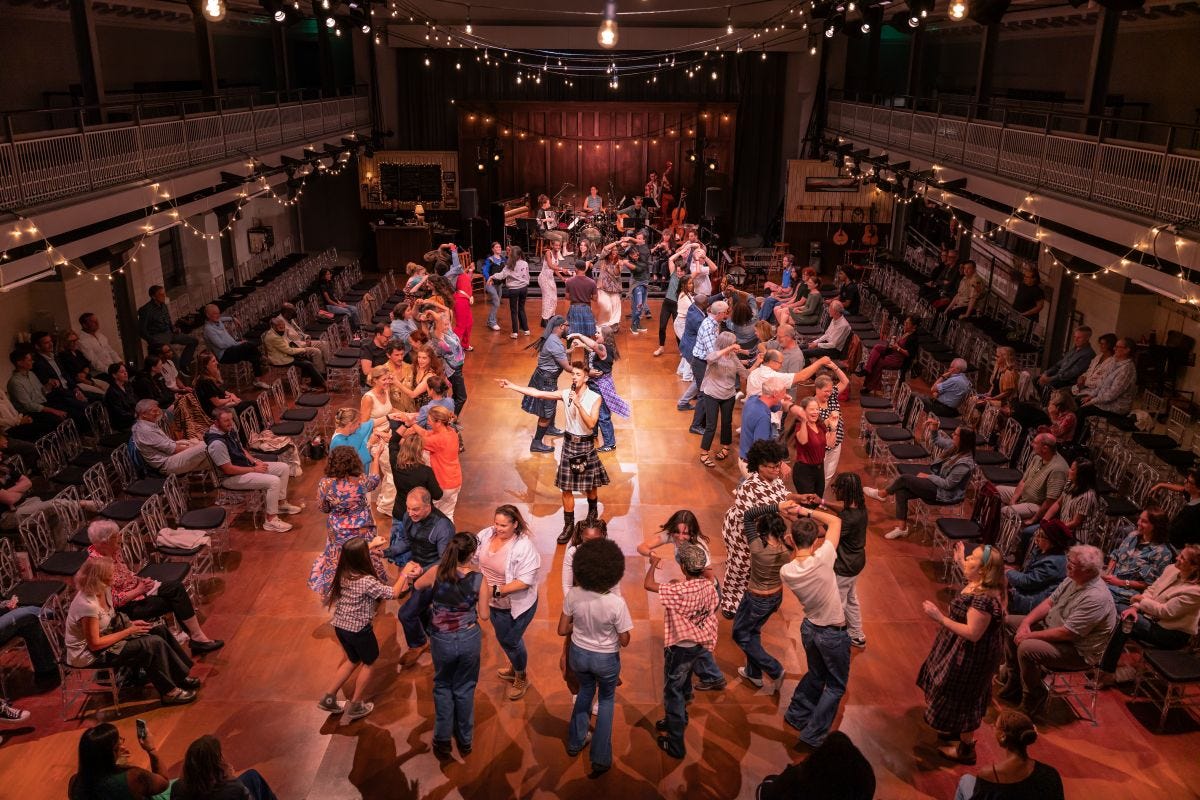
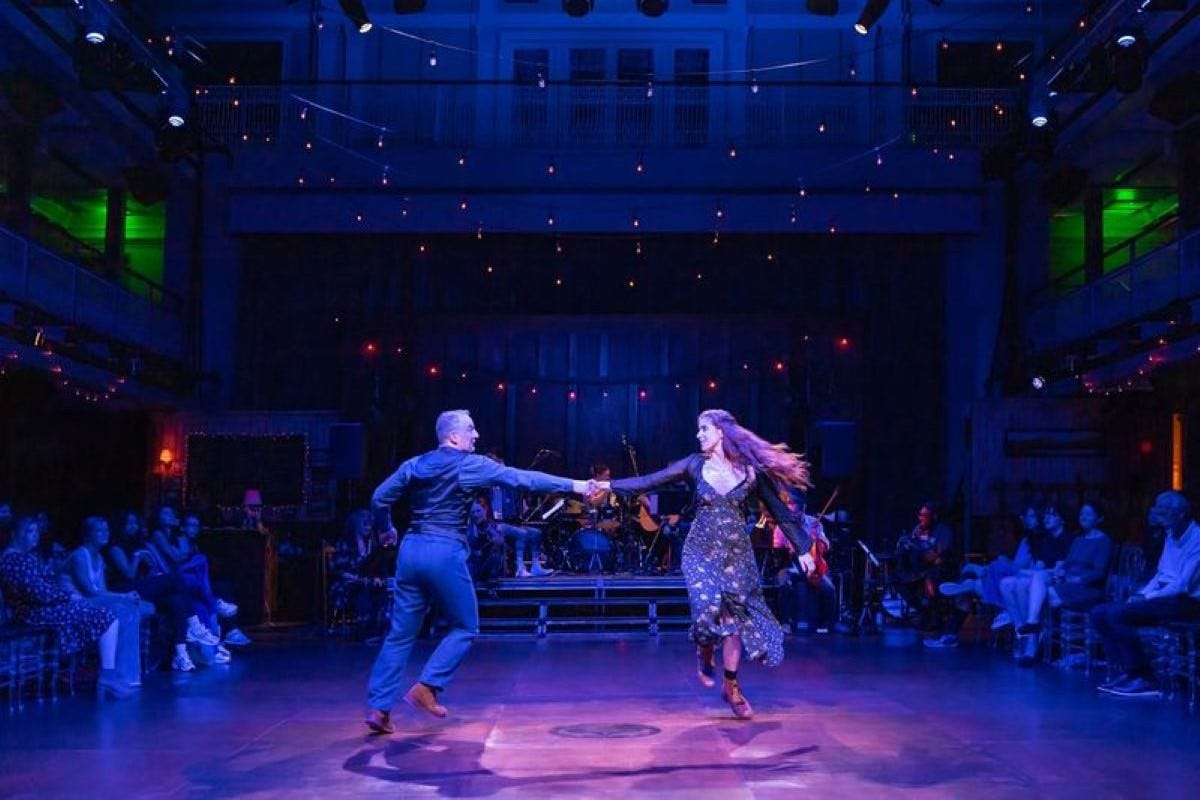
SG: For all intents and purposes, it is a ceilidh. The audience arrive at a town hall – or wherever the show goes – and there’s a band playing and a bar and everything. Then the evening starts. The caller steps forward. We do the first dance. If people want to join in, they can. If they want to sit and watch, they can. It really is as informal as a ceilidh. Then, gradually, as the dances proceed, the caller does start telling a story. We learn that he is the son of a famous caller, and the show charts the history of his family and how the tradition of calling has been shepherded down the generations. We have a big cast, roaming the space and joining in, as well.
Tell me about the show’s development since it was first commissioned?
CM: Beth and Barbara are based in the states and had never been to a ceilidh before, so it was quite hard to pitch the show to them, but they were up for it. After that, we workshopped it in Glasgow for two years, on and off, then tried a full run-through at Cottiers. Then we were bold and just tried it out in Baltimore. That was the first time we had a full creative team realising the show. It was in front of an American audience, too, who didn’t know what a ceilidh was.
I spotted that you had to spell ceilidh out phonetically - kay-lee - on the poster.
CM: That’s been a running joke on email chains. Is anyone spelling ceilidh right?
Tell me about the dances. Does the show include all the classics: Strip The Willow, Dashing White Sergeant, The Gay Gordons?
SG: Oh yeah, it is all the ones that anyone that has done a ceilidh will recognise. We want the show to have the same kinetic energy as a ceilidh, where everyone gets up and dances, then gets sweaty and has a sit down and a drink, then gets back up again. There is no forced participation, though. There’s a whole bunch of dances. If you want to dance, you can. If you don’t want to, you don’t have to.
As it is so participatory, presumably the audience has a big part to play, too?
SG: The show is not improvised. It is written and scored. But it is genuinely different every night because of the audience. They get to know each other through the dance. Relationships start forming that become a story of their own. That is one of the lovely things about it. That has been the challenge, really, to develop a show that has enough space for all that to happen.
Do you think that sense of connecting with others is part of the show’s appeal?
CM: I think so. We first wrote this during the pandemic, when the idea of taking a strangers hand and dancing felt like a thing of the past. It felt like we would never be able to do that again. That is definitely part of the joy of this experience.
What about the music? Is it an original score? Or are you using traditional tunes?
CM: It is an original score, but there are traditional tunes threaded through it. The dances are all traditional tunes. We were really keen to make sure they were. We wanted to keep the tradition of passing these songs down alive.
SG: So much of this music was never written down. It was handed on from player to player. A lot of folk in the cast are trad musicians that have learned like that through generations of their family. This show is just another step in that chain.
The show is directed by Sam Pinkleton, who won the Tony Award for Best Direction of a Play last year for Oh, Mary! How did he get involved?
SG: On that first commissioning program with Beth and Barabara, we started talking about who would be the right director. They had a relationship with Sam, so we met him, and he was like: “I’m American. I have no idea what a ceilidh is. Why are you asking me?” By coincidence, he happened to be working on a movie in Ireland, so instead of doing a read-through or anything, he got a cheap flight and spent the weekend going to a bunch of ceilidhs in Glasgow and Edinburgh with us. By the end of that weekend, he was fully on board with the show. Having someone that is unfamiliar with the tradition has actually been really helpful.
It is opening at Pitlochry Festival Theatre. How much is Alan Cumming involved?
CM: He came on board as a producer after a workshop in Glasgow and was keen to have us in his first season. We are really pleased it is going to start in Scotland.
Where does Ceilidh sit in your career? Is it the biggest thing you’ve done so far?
SG: It has been very different from our other work. It originated as an idea and has found its way with all these different folk attached, rather than originating at a theatre. It is a big show in terms of scale, but I think it is probably the most ‘us’ thing we have done. It feels very close to who we are as both writers and people.
How did you meet each other?
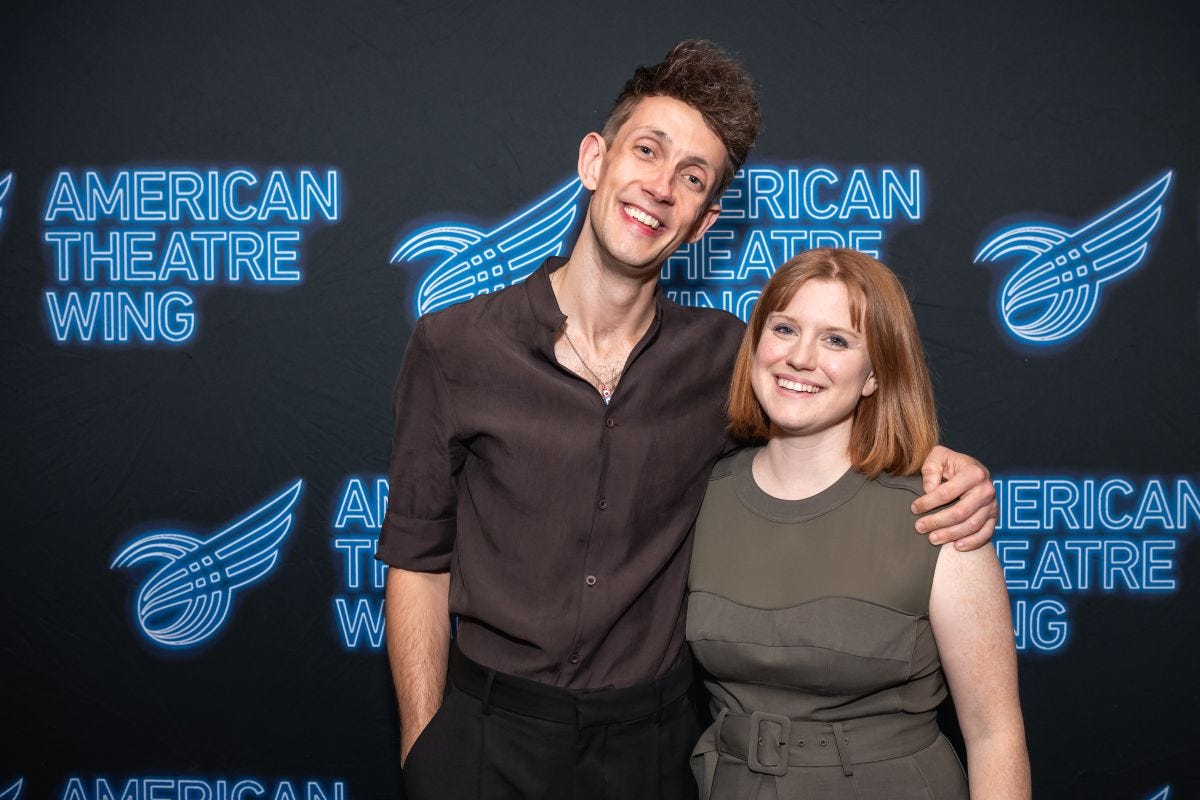
SG: We met when we were both students at the Royal Conservatoire of Scotland in Glasgow. Claire was a classical composer in the music school. I was fannying around in the theatre department. I ruined her life.
Do you remember the first moment you met?
SG: Claire is older than me. I was in my first year and I had signed up for these singing sessions with Claire. We didn’t really do any work. We just chatted. I repeatedly signed up for them and it gradually became a thing. Do you remember Orange Wednesdays? We went to see a movie together every week for two years.
CM: We didn’t start writing together until about two years into that friendship. One of the first times I saw him was in an improvised musical at the Edinburgh Fringe. I was really impressed. I graduated before Scott because, as he says, I am a little bit older, and did a few bits of work with other people, but there was something so easy about working with him. It just felt right.
When did you formalise the creative collaboration and call yourselves Noisemaker?
SG: RCS used to have a really lush relationship with The Arches in Glasgow. There was a festival called On The Verge. I signed us up to write a show together, without asking Claire whether she wanted to, and we got picked, so we had to quickly write a musical. We got a little bit of money from somewhere that allowed us to take it to the Fringe. We couldn’t just call ourselves ‘Scott and Claire’, so we came up with a name and a logo. And here we are, fourteen years later, still working together.
How have you managed to build a career in musical theatre in Scotland?
CM: The first time we were commissioned to write something was a big deal. That was Jemima Levick at Dundee Rep. She took a punt on us and asked us to write a children’s show, Little Red and the Wolf, for a family slot at Easter. We have maintained a really strong relationship with RCS as well. We took a few shows to the Fringe because they were producing them. That was because of Andrew Panton, who ran the musical theatre course there and now runs Dundee Rep.
SG: There is a huge tradition of music in theatre in Scotland, but there is not a massive tradition of musical theatre, if that makes sense. I think we were really fortunate to be part of the first wave of musical theatre. The change in the last fourteen years is so cool. Now there are full-scale musicals being made from start to finish. It’s amazing to have been a tiny part of that.
You now work a lot with American producers as well. How did that come about?
SG: We took a show called Forest Boy to the Fringe in 2013 then submitted that for a festival in New York and it got picked. That was our first interaction with America. There is a whole infrastructure for shepherding new musical theatre over there. I actually think it was really good for our development that we experienced both. We were being commissioned to write shows for theatres in Scotland, while at the same time fostering long-term commercial relationships in America.
CM: There is just a longer history of supporting and developing musical theatre over there. There are lots of awards and residencies and things. On the flip side, the positive thing about working in Scotland is the number of productions we actually got to stage in front of audiences. We have been able to do triple the amount of shows in Scotland than we could have done over there.
There are some sections of Scottish theatre that resent creatives that move away from Scotland to make work in London and beyond. Were you wary of that?
SG: To be honest, we never had a strategic plan. We just went where the work was. Sometimes that has been at home. Sometimes that has been away. What has been really eye-opening is discovering that there is a way you can do both, and there is a way both industries can support each other and develop something together, like they have with Ceilidh. It is something that has benefited from the culture and skills in Scotland and the infrastructure and commercial guidance of the States.
CM: Wild Rose is another example. There is a process that can help shows born in Scotland have a longer life. There is a real love for Scottish stories elsewhere.
SG: There is a nervousness when you take something like Ceilidh elsewhere, though. There is a risk of playing up to that shortbread tin version of Scotland, which is just death. That is so not what Ceilidh is. Every culture has its version of gathering to share music and stories. It is about being specific about your version of that and sharing it. That is what people connect to.
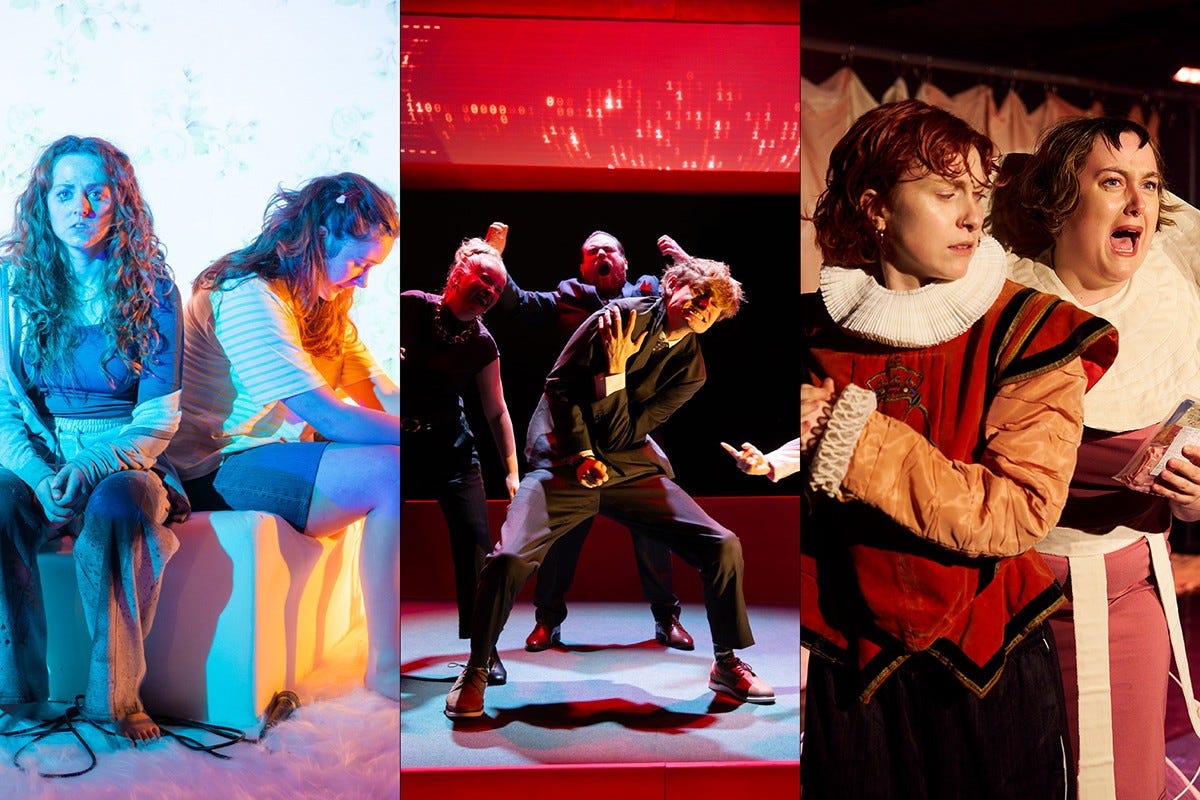
Three shows to see next week
Antigone - Tron Theatre, until October 10
This swift, smart and slippery adaptation of Antigone distils Sophocles’ ancient tragedy and its mighty themes into the story of two adolescent sisters, who play drinking games, bicker about boys, and sing karaoke together. In Finn den Hertog’s typically stylish production, they are brilliantly played by two rising stars in Holly Howden Gilchrist and Eilidh Loan. I saw it earlier this week and loved it. You can read my four-star review in The Stage here and get tickets via the button below.
Bull - Park Theatre, until October 24
Mike Bartlett’s contemporary classic Bull is a taut, tense and uncomfortable study of workplace bullying. It first ran in Sheffield and New York in 2013, then at the Young Vic in 2015, and has been staged several times since. Now, trailblazing deaf-led company Deafinitely Theatre have revived the play in their trademark style combining British Sign Language and captions. Directed by Paula Garfield, it opened at Birmingham Rep and visited HOME in Manchester last month, and now arrives at London’s Park Theatre. You can get tickets via the button below.
Ham - Soho Theatre, until October 31
The new show from Mary Higgins and Ell Potter, AKA Hotter Project, HAM boldly repurposes Hamlet to explore meat consumption, animal cruelty and the climate catastrophe, incorporating twisted Shakespearean dialogue, a pig ghost, naked dancing, a pet funeral and - be warned - some graphic images and videos of factory farms and abattoirs. A Fringe First-winning hit at this year’s Edinburgh Fringe, it now runs at Soho Theatre for a month. You can get tickets via the button below.
Thanks for reading and supporting The Crush Bar
Thanks to all 5229 subscribers and 150+ paid supporters, and particularly to The Crush Bar’s champion supporters, whose contributions make all this possible…
The Royal Court Theatre, Francesca Moody Productions, Raw Material Arts, Jermyn Street Theatre; Hampstead Theatre; Storytelling PR; Premier Scotland; Ellie Keel Productions; The Women’s Prize For Playwriting
Your organisation can become a champion supporter of The Crush Bar, join that list, and help keep its independent coverage of theatre going via the button below.
That is it for this week. If you want to get in touch about anything raised in this issue - or anything at all - just reply to this newsletter.
Fergus