
Hello, and welcome to The Crush Bar, a newsletter about theatre by Fergus Morgan.
This is the free Friday issue, which usually contains an interview with an exciting theatremaker or an essay on a theatre-related topic. This week, it is a Q&A with actor and playwright Meghan Tyler, who is starring in their own play Crocodile Fever at the Arcola Theatre. After that, there are your usual three show recommendations.
In case you missed it, here is this week’s issue of Shouts and Murmurs, which is a weekly round-up of the most interesting writing about theatre elsewhere…

You can get Shouts and Murmurs straight in your inbox every Tuesday - and help keep this newsletter going - by signing up as a paid supporter of The Crush Bar.
Theatres, companies, agencies and other organisations can also sign-up as champion supporters of The Crush Bar, which gets their name in this dedicated tab on The Crush Bar’s Substack homepage and in the footer of every Friday issue.
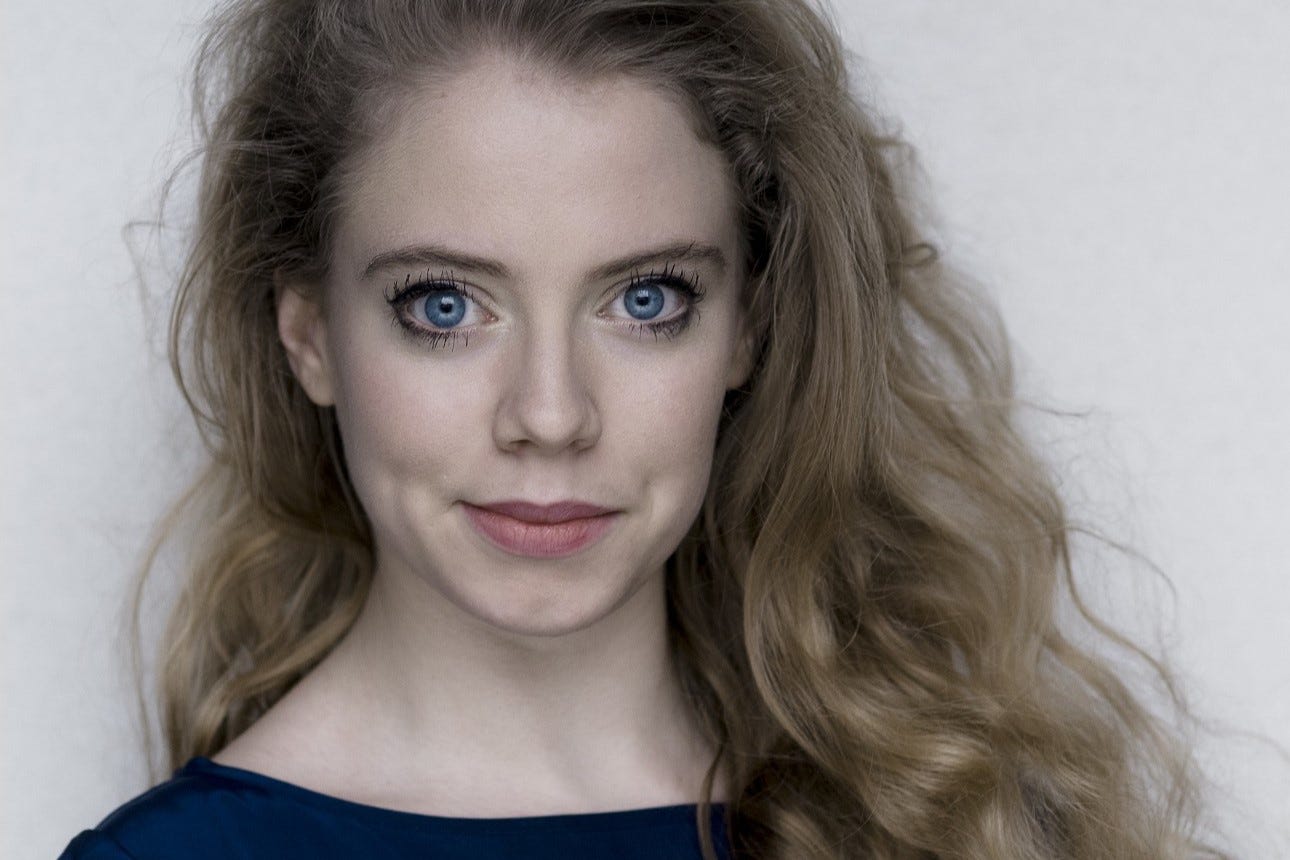
Actor and playwright Meghan Tyler has a dark sense of humour.
Born in Newry, Northern Ireland, Tyler trained at the Royal Conservatoire of Scotland in Glasgow. After graduating in 2014, they starred as Ophelia in Hamlet at the Citizens Theatre, Abigail in The Crucible at Edinburgh’s Lyceum Theatre, and Elizabeth Bennett in Isobel McArthur’s Olivier-winning Pride And Prejudice* (*Sort Of), which travelled from Glasgow’s Tron Theatre to the West End. More recently, they have worked a lot in Belfast: as Stella in A Streetcar Named Desire, Helena in A Midsummer Night’s Dream and Gwendolen in The Importance Of Being Earnest at the Lyric Theatre, and as Cass in Dominic Montague’s Aurora: A Modern Myth at The MAC.
It is as a playwright that Tyler has made the most impact, though, with provocative black comedies that are often compared to the work of fellow Glasgow-based, Northern Irish playwright David Ireland. 2018’s The Persians depicted three MPs - Tory, DUP, SNP - having a drink-soaked backdoor discussion. The same year, Medicine portrayed the relationship between a suicidal woman and her mother: it was based on Tyler’s own struggles with mental health, something they opened up about in this interview with The Times. 2023’s Fleg presented an East Belfast man getting increasingly amorous with his Union Jack following the death of the queen. And, most famously, 2019’s Crocodile Fever was a Tarantino-ish feminist revenge fantasy set during The Troubles. The play first ran at the Traverse Theatre during the Edinburgh Fringe, when The Guardian’s Mark Fisher labelled it “a raucous bloodbath in which long-standing injustices are redressed”, and is now getting a London premiere at the Arcola Theatre, staged by the venue’s artistic director Mehmet Ergen.
What is Crocodile Fever about?
The play is set in 1989, at the height of The Troubles, in South Armagh, where a lot of my family come from. It is about two sisters, who are chalk and cheese, but two sides of the same coin, who have chosen to deal with their pain in different ways. I set it in 1989 because there was a trio of abuse affecting Catholic women then. You had the Catholic Church, you had the patriarchy, and you had the British state. Women back then were getting it from all sides. They had no peace at all.
Where did the desire to address those themes come from?
Well, that Catholic pressure still continues to this day. We were taught some fucked up things in high school that you really need to get out of your head afterwards. And, of course, patriarchal abuse is something a lot of women still experience. In terms of the stuff about The Troubles, I grew up with those stories. I’m from Newry and so are my family on both my dad’s side and my mum’s side. Newry is a border town. My dad’s family lived right beside an army barracks. I was constantly being told stories by my grandad as a kid. They had a big influence on me.
The play depicts Fianna returning home to her sister Alannah and their abusive dad, then takes some pretty shocking, gory turns. How much will you say about it?
I don’t want to give too much away. Mehmet Ergen, the director of this version, said one of his favourite things about the play is that it could end at the end of Act One, but it doesn’t. There is a huge gear shift instead, and it gets a lot, lot darker.
What about the two sisters in the play? Where did they come from?
An event happened in my life when I was at drama school and I dealt with it in two very different ways. One of them was by being very quiet and intensely cleaning to feel a sense of control over something. The other was by running away and burning the whole world to the ground in quite a self-destructive way. I had that dialogue going back and forth in my head. That is where the two sisters came from. The whole thing clicked into place after I watched this documentary about crocodiles.
Sorry, did you say a documentary about crocodiles?
I was at my dad’s house late at night and I didn’t know how to change the TV channel, so I was stuck watching this repeat of a Steve Backshall documentary where he goes down this river and meets the Asmat tribe, who believe that these massive crocodiles are the reincarnations of evil humans. There are a lot of transformations like that in Irish myths and legends, too. Something just clicked into place in my head. I really don’t want to spoil anything about the play, though.
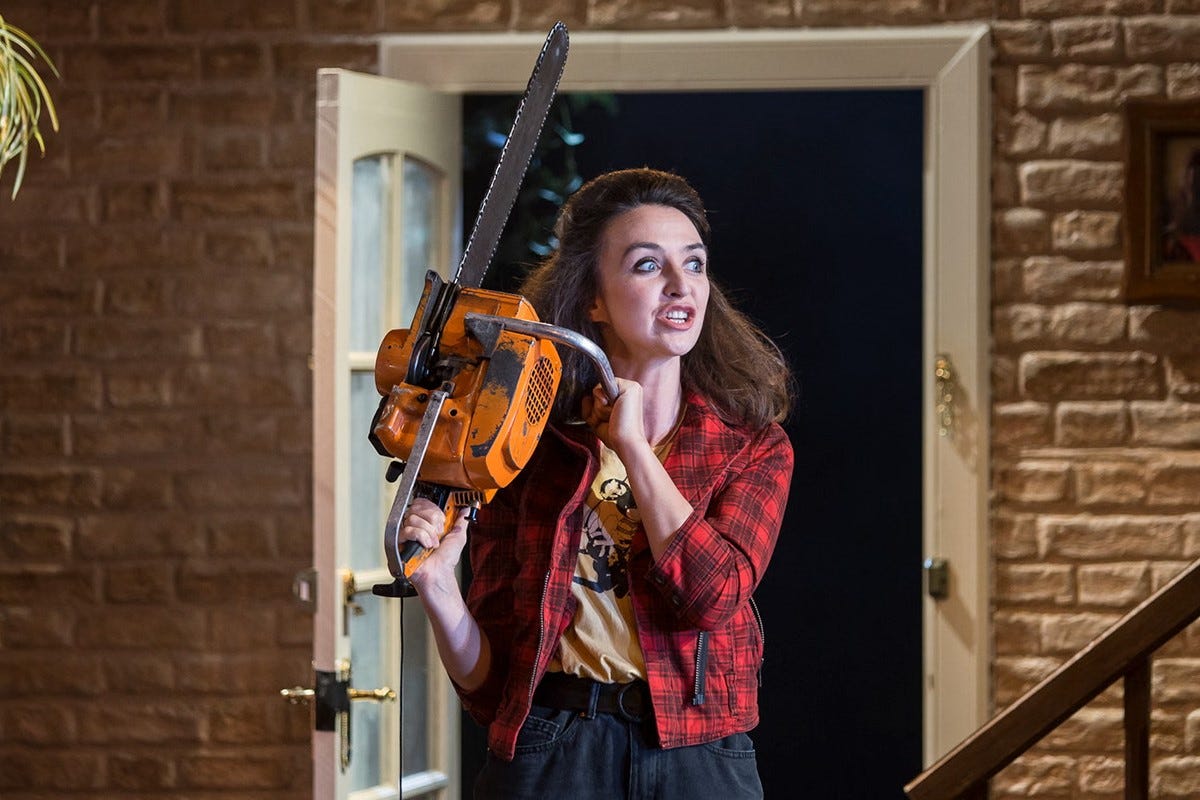
Crocodile Fever was first staged during the Edinburgh Fringe six years ago. How did this London production come about?
Yeah, it was at the Traverse Theatre in August 2019. Mehmet read it, then did a production in Turkey just after the pandemic. It’s been running there for years.
Wait. A production of Crocodile Fever has been running in Turkey for years?
Yeah, I know, it’s crazy. I really wanted to go out and see it, but never got the chance. Apparently it is still set in Newry. I’m not sure how they have translated some of the colloquialisms. What Mehmet has said is that the Turkish sense of humour is very similar to the Irish sense of humour. They really like dark comedy. I guess the themes speak to a wider human experience, too. It’s a bit mad. Anyway, Mehmet wanted to put it on in London for the Arcola’s 25th anniversary, too.
You are playing Fianna in this version. You acted in your plays The Persians and Medicine, but this is the first time with Crocodile Fever. How do you feel about that?
I was a bit hesitant at first. The last time I was in London with something didn’t go particularly well for me. Between the job I was on and where I was living and all the Omicron Covid stuff, I just didn’t have a good time, so I was a wee bit cautious about doing this. Mehmet really wanted me to do it, though, and I spoke to Jimmy Fay at the Lyric Theatre in Belfast and he told me I had to do it, so I agreed. I’m so pleased I did. The Arcola has something special about it and the process feels really collaborative. I really trust the rest of the team, too. Rachael Rooney, who plays Alannah, is actually from Newry, too. She even went to my high school. We get on like a house on fire. The chemistry was instantly there at the audition.
Your work gets compared to David Ireland a lot. Do you like that comparison?
Yeah. I love dark comedy. I love cartoonish characters with heart, parts that are really fun for an actor to play, so I’m definitely drawn to David’s work. He was actually my mentor for a little while. It’s funny. We get compared to each other all the time but we could not be more polar opposites. He is a straight man from a Protestant background and I’m a non-binary queer Fenian, basically. We both want to write about home, though, and to represent it in a way that is funny.
Funny to the point of absurdity, right? I saw your play Fleg, about an East Belfast man who gets very fond of his Union Jack. It reminded me of David Ireland’s Cyprus Avenue and its story of a unionist who thinks his granddaughter is Gerry Adams.
Yeah. Fleg came about from being in East Belfast when the queen died, which was an interesting experience. Bunting and pictures of the queen are prevalent in East Belfast all the time, but then it, like, quadrupled. I was fascinated by that.
It feels remarkably prescient, too, now people are putting up flags everywhere now.
I know. It’s spooky. I’m like: ‘Should I have put that play out into the universe? Did I make this happen?’ I thought it was specific to the sort of blind patriotism you get in East Belfast. Now I see that kind of thing happening over here with marches and Union Jacks and St George’s flags. I want to stop everyone and be like: ‘No. Don’t do it. Don’t go down that rabbit hole. It’s no good for anyone. Take it from us.’
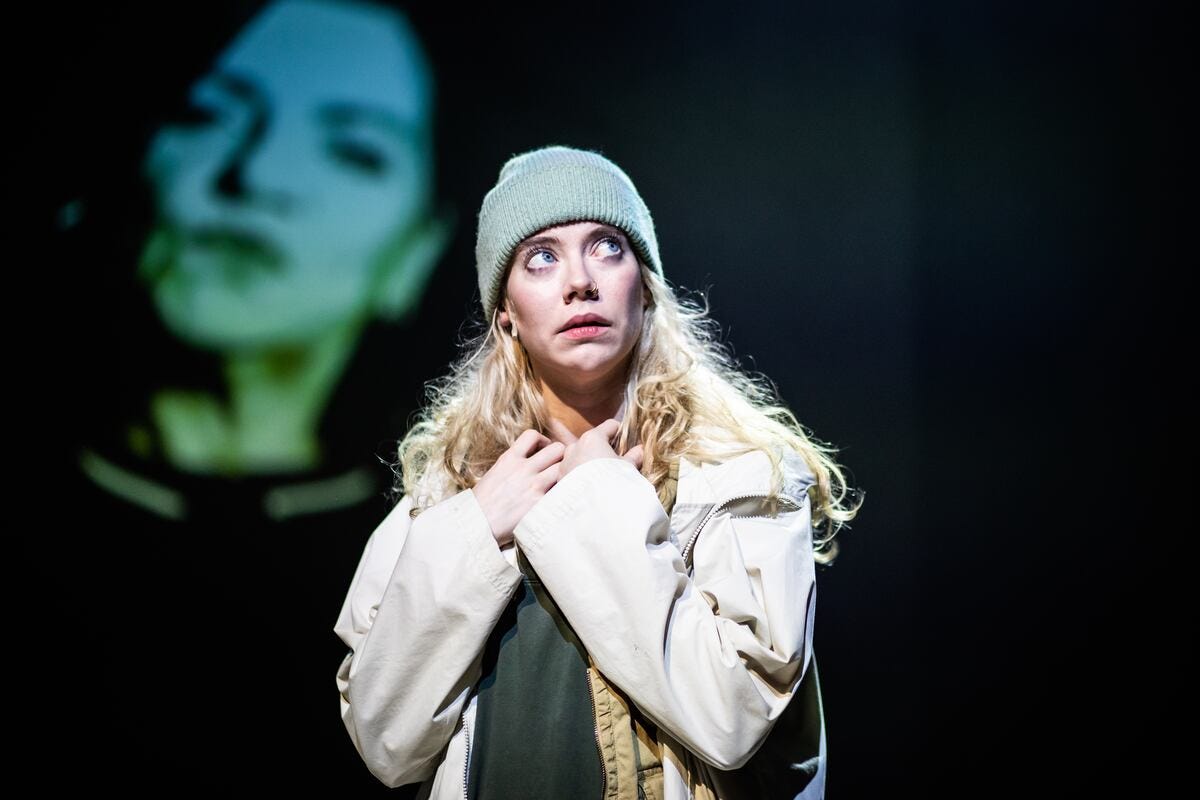
How did you get into theatre?
I was into dancing and stuff when I was little. I remember being a dancer in the all-boys grammar school’s production of West Side Story. Then one thing just led to another. Newry is quite an artistic place. There’s Newry Town Hall. There used to be the Sean Hollywood Arts Centre. There are a lot of feises and youth theatre programmes. A lot of creatives come out of Newry. Sometimes it feels like every room you walk into here, you meet someone else from Newry. We’re everywhere.
High school was where things were really cemented for me. There was a drama teacher, Brenda Rankin-Sands, who pushed a lot of us to go into the arts. People meet me and say: ‘Oh, you’re one of Brenda’s lot.’ Rachael is also one of Brenda’s lot.
You are still based in Glasgow, right? Did you think about leaving after graduating?
I am. I got my first job, Hamlet at the Citizens with Dominic Hill, right after graduating, then just kept working in Scotland. I think originally the plan was to eventually go to London, but the jobs kept coming and I really settled down there. I love the city. I love how progressive and socialist it is. Unfortunately, I have to go home to Ireland or down to London for work a lot, but my heart is in Glasgow.
There is a lot of exciting stuff happening in Glasgow, too, with Jemima Levick injecting so much energy into the Tron and Dominic reopening the Citz, which looks beautiful. I have felt like things have been quite stilted in Scotland over the last few years, but I really hope that this is the start of a rejuvenation.
I agree. Things are less encouraging in Northern Ireland, though. I just read a piece by Michael Quinn in The Stage, which painted a bleak picture of no arts minister, scant subsidy, closing organisations, fewer performances, and not enough work.
It does feel a bit bleak. There’s just not enough money and not enough jobs. Companies who used to have a number of projects on the go at once now have to focus all their energy on one at a time, and that has made it a lot harder for anyone to what they do, from actors to stage managers to costume designers, but they are not getting enough work, so they are leaving the industry. It is such a shame.
I just did Aurora and The Importance Of Being Earnest in Belfast, which was amazing. The Importance Of Being Earnest is coming back next year, too, which is great. That is Oscar Wilde as the main stage summer show at the Lyric, though. Of course it will do well, which is great, but you’re kind of like: ‘Ah, but where’s the rest?’
Crocodile Fever is at the Arcola Theatre until November 22.
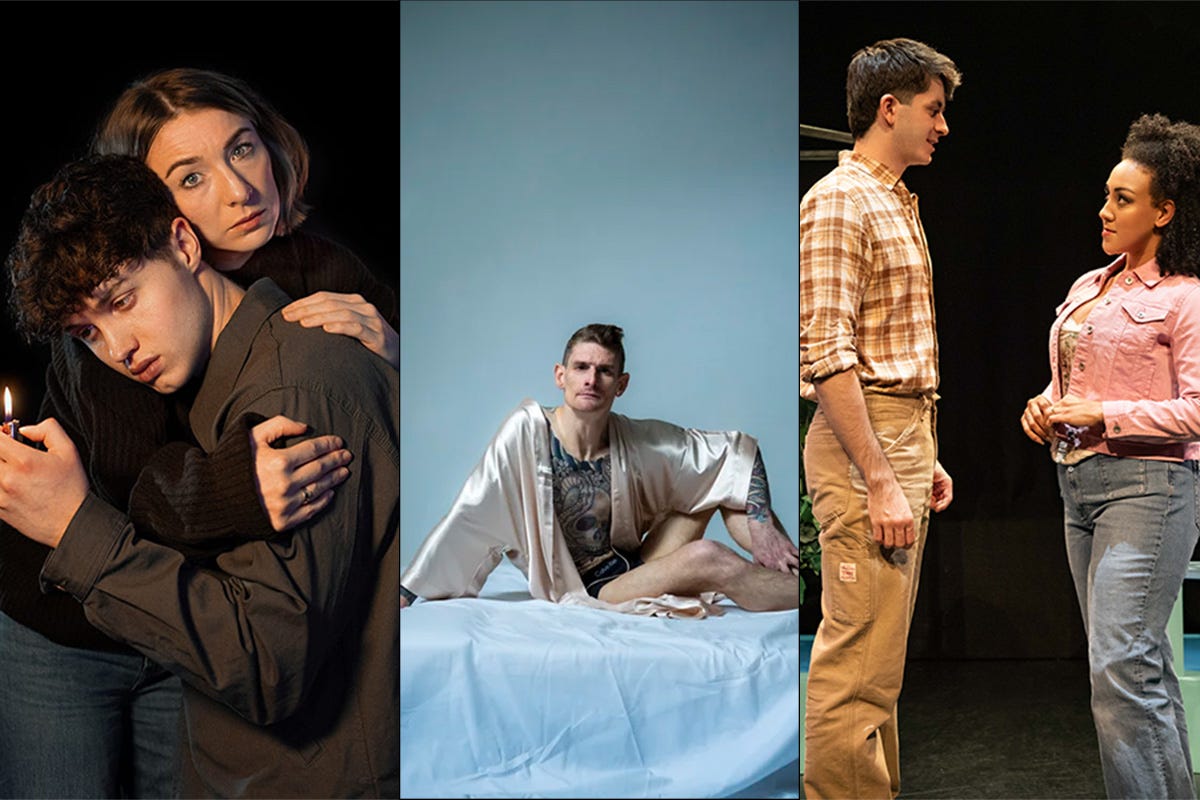
Three shows to see next week
Little Brother - Soho Theatre, until November 25
Another dark comedy from another Northern Irish writer, Eoin McAndrew’s Little Brother focuses on a self-destructive Belfast man, Niall, and his sister, Brigid, who tries to save him. It was the 2024 winner of Soho Theatre’s Verity Bargate Award - the prize that gave us Sam Grabiner’s brilliant Boys On The Verge Of Tears - and is now getting its world premiere at the venue. You can get tickets via the button below.
Take Me Somewhere Festival - various, until October 26
Glasgow’s biennial international festival of performance art returns this month, with work from big names like Dan Daw and Ontroerend Goed, Scottish companies like 21Common and Craig Manson, plus artists from Norway, Lebanon, India, Mexico, Austria, Brazil, Argentina and elsewhere. You can get tickets via the button below.
Hot Mess - Southwark Playhouse Elephant, until November 8
Jack Godfrey and Ellie Coote might be the most exciting musical theatre duo working in Britain today. Their first show, 42 Balloons, was a big hit in Salford in 2024. Their second, Hot Mess, which reimagines the history of humanity and the earth as a rocky relationship, earned acclaim and awards at this year’s Edinburgh Fringe. Now, it is getting a London run at Southwark Playhouse Elephant. You can read The Crush Bar’s chat with Godfrey and Coote here and get tickets via the button below.

Thanks for reading and supporting The Crush Bar
Thanks to all 4868 subscribers, to all 142 paid supporters, and particularly to The Crush Bar’s champion supporters, whose contributions make all this possible.
The Royal Court Theatre, Francesca Moody Productions, Raw Material Arts, Jermyn Street Theatre; Hampstead Theatre; Storytelling PR; Premier Scotland; Ellie Keel Productions; The Women’s Prize For Playwriting
Your organisation can become a champion supporter of The Crush Bar, join that list, and help keep its independent coverage of theatre going via the button below.
That is it for this week. If you want to get in touch about anything raised in this issue - or anything at all - just reply to this newsletter. I’ll be back on Tuesday.
Fergus
Link to The Arcola Theatre is wrong.